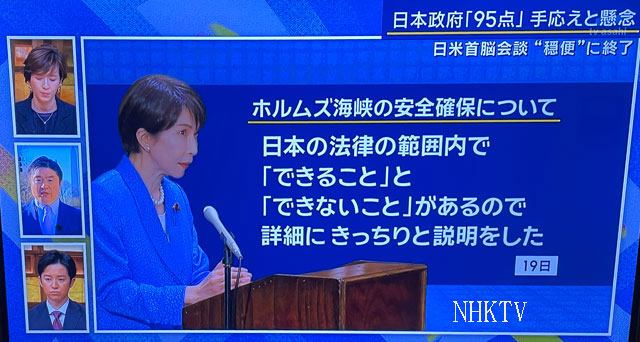
ホルムズ海峡に関する日米会談の結果
Japan-US Talks on the Strait of Hormuz
日本の憲法はGHQにより作られたのか?
The Constitution of Japan was created by the GHQ?
ホルムズ海峡に関する日本政府の対応については日本国民の多くが注視していたが、その結果が交戦中の海峡への艦船の派遣なしと成功裏に終わったことは、日米関係者の根回しの良さと、高市首相の難しい状況を踏まえた上での交渉力の結果であり、関係者及び高市首相には感謝しなければならない。
同時に、日本の法律の正しさを証明することにもなった。日本は過去にも艦船の派遣を要請されて日本の法律を楯にしてこれを断った経緯があるが、この結果として日本人は平和を愛する国民として世界中から認められ、世界を旅しても日本人だからという理由で嫌がらせを受けることは殆どない。(第2次大戦中の事を未だに国民の間に教育している国を除く)。
日本人は原爆の経験をし、戦争の悲惨さを経験した結果として世界にもまれな平和憲法があり、この憲法に基づいて作られた法律がある。この幸せな状況を壊すことの無いように特に若い方々には注意をお願いしたい。現在では法律改正は国会で比較的簡単に出来るために、憲法改正が行われると、国民の意志とは別に戦争に巻き込まれる法律の改正が容易になる。
Japan–U.S. Talks on the Strait of Hormuz
Many Japanese citizens had been closely
watching how the Japanese government would respond to the situation in the
Strait of Hormuz. The fact that the talks concluded successfully without
dispatching Japanese vessels to an active conflict zone reflects the effective
groundwork laid by those involved in Japan–U.S. relations, as well as the
negotiating ability of Prime Minister Takaichi in a difficult situation. For
this, we should express our appreciation to all parties involved, including
Prime Minister Takaichi.
At the same time, this outcome also served
to reaffirm the validity of Japan’s legal framework. In the past, Japan was
asked to dispatch vessels but declined on the basis of its domestic laws. As a
result, Japanese people have come to be recognized around the world as a
peace‑loving nation, and it is rare for Japanese travelers to face harassment
simply because they are Japanese.
Japan has experienced the atomic bombings
and the tragedies of war, and from that history emerged a uniquely
peace‑oriented constitution, along with the laws established under it. I would
like to urge especially younger generations to take care not to undermine this
fortunate state of affairs. Today, because ordinary laws can be amended
relatively easily by the Diet, once the constitution is revised, it becomes
easier for laws to be changed in ways that may not necessarily reflect the will
of the people.
<
日本の憲法は駐留軍(GHQ)が作ったのか?(by Gemini)
日本の憲法は駐留軍(GHQ)が作った」という説は、歴史的な事実として「草案(たたき台)をGHQが作成した」という点では正しいですが、プロセス全体を見るともう少し複雑な経緯があります。
結論から言うと、「GHQが示した草案をもとに、日本側が修正・議論を重ねて成立させた」というのが正確な表現です。
主な流れを簡潔に整理しました。
1. なぜGHQが書くことになったのか?
当初、日本政府(松本烝治国務大臣ら)が憲法改正案を自ら作りましたが、その内容は明治憲法とあまり変わらない保守的なものでした。
これを見たGHQは「これでは日本の民主化は進まない」と判断。1946年2月、わずか約1週間でGHQ独自の草案(いわゆるマッカーサー草案)を作成し、日本側に提示しました。
2. 「押しつけ」か「合意」か
GHQは日本政府に対し、「この草案を受け入れないなら、天皇制の維持は保証できない」といった強い圧力をかけたとされています。日本政府はこれに驚きつつも、最終的にはこの草案を受け入れ、自分たちの手で日本風の表現に翻訳・修正する作業に入りました。
3. 日本側によるアレンジ
草案がそのまま憲法になったわけではありません。
• 文体の変更: 当初は直訳調で不自然でしたが、日本側で「ひらがな口語体」に書き直しました。
• 議会での修正: 当時の帝国議会で民主的な議論が行われ、例えば「生存権(25条)」などは日本側の提案で追加・具体化されました。
まとめ
• きっかけと基本骨格: GHQ(駐留軍)が作成した。
• 成立までのプロセス: 日本政府と議会が検討し、一部修正を加えて制定された。
そのため、現在でも「押しつけ憲法論(独立国として自分たちでゼロから作るべき)」という意見と、「当時の日本国民も歓迎し、議会で正当な手続きを経て成立した」という意見の両方が存在し、憲法改正論議の大きなポイントになっています。
the Constitution of Japan was created by the GHQ
(by Gemini)
The theory that "the Constitution of Japan was created by the GHQ"
is historically correct in the sense that the GHQ prepared the initial
draft. However, the overall process was more complex.
To be precise, it is best described as
follows: "The Japanese side revised and debated a draft presented by the
GHQ to establish the final version."
Here is a brief summary of the key process:
1. Why did the GHQ write it?
Initially, the Japanese government (led by
Minister of State Joji Matsumoto) created its own proposal. However, it was
very conservative and barely different from the Meiji Constitution. The GHQ
judged that this would not promote democratization. In February 1946, the GHQ
created its own draft (the MacArthur Draft) in just about a week and presented
it to Japan.
2. "Imposition" or "Agreement"?
The GHQ reportedly pressured the Japanese
government, implying that the retention of the Emperor system could not be
guaranteed if they rejected the draft. Though shocked, the Japanese government
ultimately accepted it and began translating and refining it into a Japanese
context.
3. Adjustments by the Japanese Side
The draft did not become the constitution
exactly as it was.
• Style Changes: The initial translation
felt unnatural, so the Japanese side rewrote it into a modern, colloquial style
using Hiragana.
• Diet Amendments: Democratic debates took
place in the Imperial Diet. For instance, "the right to life"
(Article 25) was added and clarified based on Japanese proposals.
Summary
• Origin and Framework: Created by the GHQ.
• Process to Establishment: Reviewed,
partially amended, and enacted by the Japanese government and the Diet.
Consequently, two viewpoints still coexist
today: the "Imposed Constitution" theory (the idea that an
independent nation should create its own from scratch) and the view that
"the Japanese people welcomed it at the time, and it was established
through legitimate parliamentary procedures." This remains a major point
of contention in constitutional reform debates.
|