|
日米協力して円とドルを守る
Japan and the US cooperate to defend the yen and the dollar
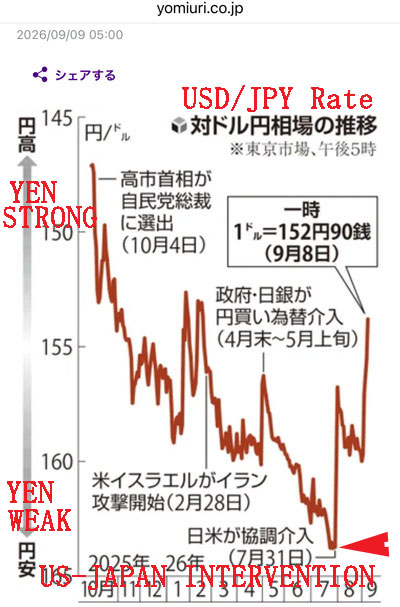
日本における最近の話題の一つが円の動きになる。これは輸入品価格に影響し、円安になれば輸入品価格の高騰により人々をより安い商品へ、あるいは消費の減少に向かわせる。
このグラフによると明らかに7月31日の日米協調介入により8月、9月にかけて急激に円高へ切り替わっている。これが、今後継続するかというと、検討すべき課題がいくつか出てくる。
1.日米の金利差:米国のFRB金利が3.75-4%前後に対し、日銀の金利は漸く1.25%になったばかりで、他の条件が同じであれば、当然世界のお金は米国に向かっていく。
円キャリートレード:低金利の円を借りて、円を売ってドルに換えて米国債などを購入して金利差を収益にする。最近の投資会社の一番の儲けはこの円キャリートレードだといわれる。これはリスクがなく確実に儲かる為に、大きなお金がこのビジネスに振り向けられている。円を売ってドルを買うので、円安の原因になる。
2.貿易収支:日本はかって輸出大国であった為に大幅な黒字であったが、現在では生産拠点を外国に移しており、また石油・ガスなどの原材料を大量にドルで買っている為に赤字になり、円を売ってドルを買って決済するので、これも円安の原因になる。
最近では半導体、データセンター関連の売れ行きが伸びており、黒字になることもある。
3.対外収支:海外で儲けたお金を、海外に溜めるか、日本に送金する。この為に日本の金融収支は大きな黒字になり、海外資産は最近まで世界一であった。今はドイツ・中国についで三番。これは日本に送金されたドルを売って円を買うので、円高の原因になる。
4.米国債:日本はかって円高を調整するために、円を売ってドルを買い、米国債で持っている。最近続く円安を防ぐ為に円を買っているが、この円買いの原資として米国債を売り出している。
この日本の米国債の売り出しは米国に取ってはドル安に直結するので、日本の米国債売りを止めるために、米国が円を買い、円安を防ぎ、同時に日本は米国債売りを止めて円を買う、この日米協調による円買いが上記のグラフに見られる円高へのきっかけとなった。
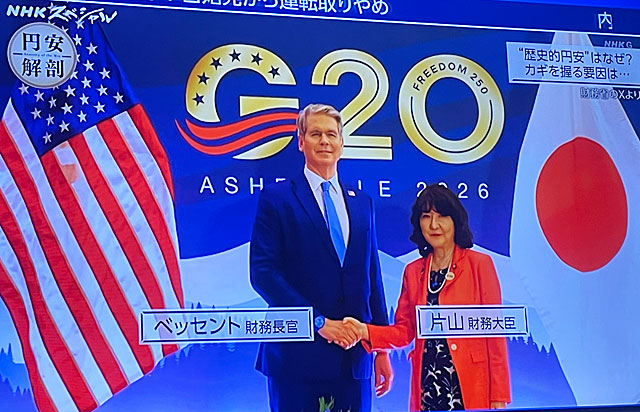
これは言葉で言えば簡単に聞こえるが、実務上の打ち合わせは容易ではなく、今回の日米協調介入が成功裏に終わったのも、片山財務大臣がベッセント財務長官との交渉にたくみであったことによる。
今後どうなるか:
日本の対外資産は会社の買収、工場の建設資金などに使われており、すぐに日本に換金して持って来れるものでもないので、対外資産があるから円は大丈夫とは言えない。
一方で政府が日本の先端産業に大きなお金を投資して日本の債務を増やせば、投機資金は円売りに向かうのは確実。
また、米国債を大きく売り出してドル安の方向に向かわせると、米国は黙ってはいない。
このバランスを考えて円を維持するのは相当な国際経験を持つ財務のベテランでないと難しい。
Japan and the US cooperate to
defend the yen and the dollar
One of the recent talking points in
Japan is the movement of the yen. This impacts import prices; a weaker yen
leads to surging import prices, driving people toward cheaper goods or causing
them to cut back on consumption.
According to this graph, the joint
intervention by Japan and the US on July 31 clearly triggered a sharp shift
toward a stronger yen through August and September. However, whether this trend
will continue raises several issues that need to be examined.
1. Interest Rate Differential Between Japan and the US: While the US Federal Reserve's interest rate sits
around 3.75–4%, the Bank of Japan's rate has only recently reached 1.25%.
Ceteris paribus (all else being equal), global funds will naturally flow toward
the United States.
1. Yen Carry Trade: This
involves borrowing the low-interest yen, selling it to exchange for US dollars,
and purchasing assets like US Treasuries to profit from the interest rate
differential. It is said that the biggest profits for investment firms lately
come from this yen carry trade. Because it yields steady returns with minimal
risk, massive amounts of capital are being directed into this strategy. Since
it involves selling yen and buying dollars, it acts as a cause of depreciation
for the yen.
2. Trade Balance: Japan was once a major exporting nation with a massive trade surplus, but manufacturing bases have since moved overseas. Furthermore, because Japan buys large quantities of raw materials such as oil and gas in US dollars, it runs a deficit. Setting these accounts requires selling yen to buy dollars, which also contributes to a weaker yen. Recently, sales related to semiconductors and data centers have been growing, occasionally resulting in a trade surplus.
3. External Balance:
Profits earned overseas are either retained abroad or remitted back to Japan.
As a result, Japan's financial balance registers a large surplus, and its
overseas assets were, until recently, the largest in the world (currently
ranked third behind Germany and China). Because this involves selling the US
dollars remitted to Japan to buy yen, it acts as a cause of appreciation for
the yen.
4. US Treasuries: In the
past, to adjust for a strong yen, Japan sold yen to buy dollars and held them
in US Treasuries. To prevent the recent continuous depreciation of the yen,
Japan has been buying yen, selling off US Treasuries as the source of funds for
these yen purchases.
For the United States, Japan's
selling of US Treasuries directly translates to a weaker dollar. To stop Japan
from selling US Treasuries, the US bought yen to prevent its depreciation,
while Japan halted its sale of Treasuries and bought yen. This joint US-Japan
coordinated yen-buying served as the catalyst for the yen appreciation seen in
the graph above.
While this sounds simple in words,
practical coordination is far from easy. The reason this recent joint US-Japan
intervention ended successfully is due to Finance Minister Katayama's skillful
negotiations with US Treasury Secretary Bessent.
What will happen going forward:
Japan's external assets are used
for acquisitions and factory construction funds, meaning they cannot be readily
converted to cash and brought back to Japan immediately. Moreover, the
government cannot force the private sector to sell its assets, so we cannot
simply assume the yen is safe just because external assets exist.
On the other hand, if the
government pours massive amounts of money into Japan's advanced industries and
increases national debt, speculative capital will almost certainly move toward
selling the yen.
Additionally, if Japan were to sell
off large amounts of US Treasuries and push toward a weaker dollar, the United
States would not sit back and stay silent.
Maintaining the yen while balancing
these factors is exceedingly difficult and requires a veteran finance official
with substantial international experience.
|
