 |
人々と話をしよう
1.日本には新聞、TV、雑誌など様々なメディアがあり、毎日情報が発信されているので、日本の現状について人々がはっきり認識しているだろうと思うと、必ずしも正しく理解されていない。
この為に票を稼ぐために少しでも多く消費税を下げることに頑張っている政党が多い、これに対して「国債の金利が上がることが日本にとっていかに大変なことか分かっていない」と答えるだけでは、一般の日本人に理解して貰うのは難しい。
貧しい家庭では親の稼ぎが足りないからと言って子供が親に向かって文句を言うことは無い。なぜなら、自分たちの状況は日々の生活を通して十分に理解しているから。
政治家の方々と国民の間には家族と同様にお互いの理解が必要になる。この説明が難しいのは理解できるが、出来るだけ努力をすることが必要で、政治家の方々が努力をされればされるほど国民の間には正しい理解が広がるのは間違いない。
「政治家と国民の関係は、民主主義の根幹をなす重要なものです。簡単に言えば、政治家は国民の代表であり、国民は政治家を選び、見守る存在です。(Copilot)」
2.日本の歳入と歳出
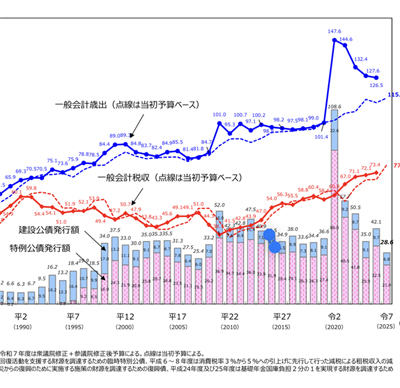
この財務省よりの資料を見ると、一般会計歳出と一般会計税収は平成2年頃から段々と離れていってクロスする気配がない。いわゆる「ワニの口」である。国の借金(国債、借入金、政府短期証券)は令和7年度(2025年)3月末時点で1,323兆円で過去最大を更新している。
日本は対外資産を2024年末で533.5兆円世界一で(2025年はドイツに抜かれて2位)、お金持ちで問題無いとの意見もあるが、株式の買取や工場の建設費などはすぐに引き上げるわけには行かないので、対外資産をあてにして借金が可能というには無理がある。
日本国債が売られる主な理由は金利の上昇と財政不安の増大で、金利の上昇は国債の価格と逆の動きをするため、金利が上昇すると国債の価格が下落し、売られる傾向にある。
国債が売られ始めると、国債を多額に買っている金融機関の株価は下がり、誰も国債を買わなくなり、政府のお金が無くなり、不払いまたは資金引き当てのない紙幣の印刷が始まる。戦後これを避けるために日本政府が行った内容は日銀前の貨幣博物館に詳細な説明がある。
参考:
貨幣博物館には過去の日本経済の変遷が細かに説明されており、戦争による財政赤字と紙幣の大量発行によりハイパーインフレが起こり、預金封鎖、新円切り替えが行われ、現金、国債は無価値になり、紙幣で資産を守ろうとした人々が大損したことが説明されている。
この歴史を考えると、「国債の金利が上がることが日本にとっていかに大変なことか分かっていない」と言われた理由が分かる。
Let's talk to people,
1. In Japan, there are various media such as newspapers, TV, and magazines,
and information is disseminated every day, so you might think that people
have a clear understanding of the current situation in Japan, but it is
not necessarily correctly understood.
For this reason, many political parties are working hard to lower the consumption tax as much as possible to gain votes, and it is difficult to get ordinary Japanese people to understand by simply replying, "You dont't understand how difficult it is for Japan if interest rates on national bonds rise."
In poor families, children do not complain to their parents just because
their parents do not earn enough. This is because they fully understand
their situation through their daily lives.
Politicians and the public need to understand each other, just like families.
I understand this explanation is difficult, but it is necessary to make
as much effort as possible, and the more effort politicians make, the more
correct understanding will surely spread among the public.
The relationship between politicians and people is very important and forms
the foundation of democracy. Simply put, politicians are "representative
of the people" and the people "are the ones who choose and monitor
politicians"(Copilot)
2.Japan's revenues and expenditures
Looking at this document from the Ministry of Finance,general account expenditures
and general account tax revenues have gradually drifted apart since around
1990, and there is no sign of them crossing. This is what is known as the
"crocodile's mouth."
The national debt (government bonds, borrowings, and short-term government
securities) is 1,323 trillion yen as of the end of March 2025, a record
high.
Japan held the world's larggest net external assets at 533.5 trillion yen
at the end of 2024, but was overtaken by Germany in 2025, falling to second
place. Some argue that this indicates the country is wealthy and there
is no cause for concern, but since assets like equities and the cost of
factory construction cannot be quickly liquidated, it is unrealistic to
assume these external assets can serve as basis for borrowing.
The main reasons for the selling of Japanese government bonds are rising
interest rates and increasing financial unceretainty. Since rising interest
rate move in the opposite direction to the price of government bonds, when
interest rates rise, the price of government bonds falls and they tend
to be sold.
When government bonds start to be sold, the stock prices of financial institutions
that have bought large amounts of government bonds fall, no one buys government
bonds, the government runs out of money, and the printing of unpaid or
unfunded banknotes begins. The actions taken by the Japanese government
after the war to avoid this are explained in detail in the Currency Museum
in front of the Bank of Japan.
Reference:The currency Museum provides a detailed explanation of the past
changes in the Japanese economy, explaining how war-related deficits and
the massive issuance of paper money led to hyperinflation, which led to
deposit freezes and the coversion to the new yen, making cash and government
bonds worthless and causing huge losses for people who tried to protect
their assets with paper money.
Consideing this history, it it easy to understand why politicians say,
"They doo't understand how difficutl it would be for Japan if interst
rates on government bonds rose."
|

